
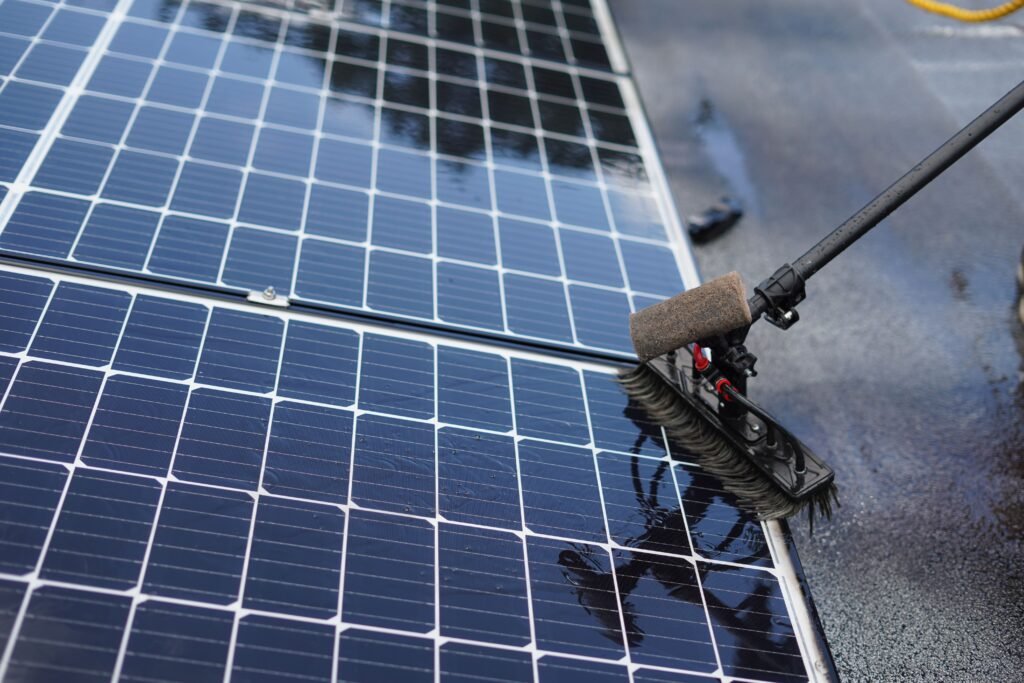
Installing solar panels is a smart investment for Perth homeowners. With plenty of sunshine throughout the year, solar energy can help reduce electricity bills and make your home more energy-efficient. But there’s one thing many homeowners overlook after installation: keeping their solar panels clean.
Think about your car windscreen after a few weeks without washing it. Dust, dirt, bird droppings and other marks gradually build up, making it harder to see through the glass. Something similar happens to solar panels.
Although solar panels are designed to withstand outdoors harsh conditions, they aren’t completely maintenance-free. Over time, dirt and debris can settle on their surfaces, reducing the amount of sunlight reaching the solar cells.
So, can cleaning solar panels improve their performance?
The short answer is yes. When dirt is blocking sunlight, removing that buildup can help panels generate more electricity. However, the improvement depends on how dirty the panels are, their location and the condition of the solar system.
Let’s explore why solar panel cleaning Perth homeowners invest in can be worthwhile, how contamination affects energy production and when professional cleaning makes sense.
How Do Dirty Solar Panels Affect Performance?
Solar panels generate electricity by converting sunlight into usable energy. For this process to work efficiently, sunlight needs to pass through the protective glass and reach the photovoltaic cells underneath.
When the glass becomes covered in dust, dirt or other contaminants, some sunlight gets blocked, reflected or scattered before reaching those cells.
This problem is commonly known as solar panel soiling.
A light coating of dust might not seem particularly concerning, especially when viewed from the ground. However, even fine particles can affect how much sunlight reaches the panel.
As contamination accumulates, the impact can become more noticeable.
Common signs of dirty solar panels include:
- Visible dust or a dull, cloudy appearance
- Bird droppings stuck to the glass
- Leaves and debris collecting around panel edges
- Water stains and stubborn dirt patches
- Lower electricity generation compared with similar weather conditions
Not every drop in solar output is caused by dirty panels. Shading, equipment faults, temperature and seasonal changes can also affect performance.
However, if your panels haven’t been cleaned for a long time, accumulated dirt is certainly worth investigating.
Why Solar Panels Get Dirty in Perth
Perth enjoys excellent conditions for solar energy generation, but its environment also exposes rooftop panels to several types of contamination.
Understanding what causes this buildup can help homeowners recognise when cleaning might be necessary.
1. Dust and Airborne Dirt
Perth’s dry summer conditions can contribute to dust accumulation, particularly in suburbs near construction sites, busy roads and open land.
Wind carries fine particles through the air, allowing them to settle on rooftops and solar panels.
Over time, these particles can form a thin layer across the glass.
Because this buildup often develops gradually, homeowners might not notice how dirty their panels have become.
2. Bird Droppings
Bird droppings are another common problem for rooftop solar installations.
Unlike loose dust, bird droppings can stick firmly to the glass and remain there even after rainfall.
They can also block sunlight over specific sections of a panel.
Bird activity may be particularly noticeable around homes with nearby trees, roof perches or other attractive nesting areas.
3. Coastal Salt and Airborne Residue
Homes near Perth’s coastline may experience additional contamination from salt carried in the sea breeze.
Salt deposits can combine with dust and moisture, leaving a residue on exposed surfaces.
For homeowners living in coastal suburbs, regularly checking solar panels for buildup can be a sensible part of property maintenance.
4. Leaves, Pollen and Organic Debris
If your home is surrounded by trees, your solar panels may collect pollen, leaves and other organic material.
Leaves can gather around panel frames, while pollen and fine debris may stick to the glass.
Moisture can make these deposits harder to remove naturally.
5. Rainwater Marks and Stubborn Grime
Rain helps remove some loose dirt, but it doesn’t always leave solar panels completely clean.
Light rainfall can mix with existing dust and leave residue behind as the water evaporates.
Repeated cycles of dust, moisture and drying can make contamination more difficult to remove.
This is one reason homeowners sometimes choose professional solar panel cleaning rather than relying entirely on the weather.
Can Cleaning Solar Panels Really Increase Electricity Output?
Yes, cleaning can improve electricity production when surface contamination is restricting sunlight.
The important thing to understand is that cleaning doesn’t increase a solar panel’s original rated capacity. Instead, it helps recover energy generation that may have been lost because of dirt.
Research from the US National Renewable Energy Laboratory (NREL) confirms that accumulated dust and other particles can reduce photovoltaic performance.
In one study involving solar installations affected by pollen, researchers recorded performance improvements of approximately 5% to 11% after cleaning.
Those results don’t mean every Perth household will experience the same improvement. Actual results depend on the amount and type of contamination, panel orientation, weather and other operating conditions.
For example, panels covered in heavy dust and bird droppings may benefit noticeably from cleaning, while panels that are already relatively clean might show little change.
The best way to assess the benefit is to compare solar generation under similar conditions before and after cleaning.
The key takeaway: Clean panels can make better use of available sunlight, but the improvement varies from one property to another.
Doesn’t Rain Clean Solar Panels Naturally?
This is one of the most common questions homeowners ask.
After all, if rain washes dirt off your roof and windows, shouldn’t it do the same for solar panels?
To some extent, yes.
A good downpour can remove loose dust and some surface debris. However, rainfall isn’t always enough to remove stubborn contamination.
Bird droppings, sticky pollen, grime and mineral deposits may remain attached to the glass.
In fact, NREL research has found that even regular rainfall may not fully restore solar panel performance where certain types of contamination are present.
Perth’s long, dry summer periods can also allow dust to accumulate between substantial rainfall events.
That’s why it makes sense to inspect your panels periodically instead of assuming rain will handle everything.
If your panels still look dusty or stained after rainfall, professional cleaning may be worth considering.
Benefits of Professional Solar Panel Cleaning
Cleaning solar panels isn’t simply about making your roof look tidy. When performed correctly and at the right time, it can support the ongoing performance and care of your solar installation.
1. Helps Restore Lost Solar Efficiency
The most obvious benefit is removing the dirt that prevents sunlight from reaching the solar cells.
By clearing dust, bird droppings and surface grime, cleaning can help restore some of the electricity generation lost through soiling.
For households relying on solar power to offset electricity costs, recovering that lost production can be valuable.
2. Supports Long-Term Panel Care
Solar panels are built for durability, but their glass surfaces and protective coatings still require appropriate care.
Allowing stubborn contamination to remain indefinitely isn’t ideal.
Regular inspections and suitable cleaning help homeowners keep the panel surfaces in good condition and identify visible issues that might need attention.
Cleaning doesn’t replace electrical maintenance, but it can form part of a sensible overall maintenance routine.
3. Reduces the Need for Risky DIY Cleaning
Most residential solar panels are installed on rooftops, making access difficult and potentially dangerous.
Climbing onto a roof with cleaning equipment introduces risks, especially when water and slippery surfaces are involved.
Professional cleaners with appropriate equipment and safe access procedures can reduce the need for homeowners to attempt hazardous roof work themselves.
4. Uses Appropriate Cleaning Methods
Solar panels shouldn’t be treated like ordinary concrete or paving.
High-pressure washing, abrasive brushes and harsh cleaning chemicals can damage glass coatings, seals or other components.
Professional solar panel cleaning should involve methods suitable for the particular panels, following manufacturer guidance.
This may include soft, non-abrasive equipment and appropriately treated water.
5. Helps You Get More Value From Your Solar Investment
A solar system is a significant investment.
While cleaning won’t solve every performance problem, removing accumulated contamination helps ensure avoidable dirt isn’t holding the system back.
For heavily soiled panels, the additional electricity generated after cleaning may help justify the service cost.
The financial benefit will depend on your electricity rates, system output, cleaning price and how quickly the panels become dirty again.
How Often Should Solar Panels Be Cleaned in Perth?
There’s no single cleaning schedule that suits every Perth property.
Some installations remain reasonably clean for long periods, while others accumulate contamination much faster.
The ideal frequency depends on several factors, including:
- Location: Homes near dusty roads, construction activity or coastal areas may experience more buildup.
- Surrounding trees: Pollen, leaves and bird activity can increase contamination.
- Panel angle: Flatter panels may retain more dirt and standing residue than steeper installations.
- Rainfall: Substantial rain can help wash away loose dust, while long dry periods allow it to accumulate.
- Visible contamination: Stubborn stains or heavy deposits may justify earlier cleaning.
For many households, an annual visual inspection is a reasonable starting point. Some properties may benefit from cleaning once or twice a year, while others may need it less frequently.
Rather than paying for unnecessary cleaning, consider the condition of your panels and their electricity generation history.
If you’re unsure whether cleaning is worthwhile, ask a professional to assess the visible contamination and explain the recommended approach.
Can You Clean Solar Panels Yourself?
It’s understandable to consider washing your panels yourself, especially if they look dusty.
However, there are important safety and maintenance considerations.
Solar panels contain electrical components, and rooftop installations introduce fall hazards.
Incorrect cleaning methods can also cause scratches or damage to protective coatings.
If you’re considering DIY cleaning, always check the manufacturer’s instructions first.
Avoid pressure washers, abrasive tools, harsh detergents and attempting to access an unsafe roof.
It’s also best not to apply cold water to extremely hot panels unless the manufacturer specifically permits the method, because sudden temperature changes may create unnecessary stress.
For rooftop systems that are difficult to access, professional solar panel cleaning is generally the safer option.
A qualified solar electrician should handle electrical faults, damaged wiring or other technical problems discovered during inspection.
Why Choose Professional Solar Panel Cleaning in Perth?
When searching for a company to clean solar panels Perth homeowners should look beyond the cheapest quote.
Solar panels require a different approach from standard exterior surfaces.
A suitable service provider should understand the importance of gentle cleaning, appropriate equipment and safe roof access.
Before booking, it’s worth asking:
- Do you use cleaning methods suitable for solar panel glass?
- Do you follow the panel manufacturer’s cleaning recommendations?
- How do you manage roof access and working-at-heights safety?
- Are you appropriately insured for the work?
- Can you explain what is included in the cleaning service?
These questions can help you make an informed decision and protect your solar investment.
When Is Solar Panel Cleaning Worth the Cost?
Not every solar system needs frequent washing.
If your panels are already clean, rainfall regularly removes loose dust and your electricity generation is performing as expected, paying for additional cleaning might offer limited benefit.
However, cleaning becomes more worthwhile when contamination is clearly visible or when accumulated dirt appears to be affecting output.
For example, imagine a household with panels exposed to nearby construction dust throughout summer.
After several months, a noticeable layer of dirt has settled across the installation.
Removing that buildup may improve sunlight transmission and help the system recover lost electricity production.
On the other hand, a home with relatively clean panels and no noticeable soiling-related losses may not need immediate attention.
A practical approach is to check your solar monitoring app, review your panels’ condition from a safe location and consider professional cleaning when the evidence supports it.
Keep Your Solar Panels Performing With Revive Pressure Cleaning Perth
Your solar panels work hard throughout the year, helping your household take advantage of Perth’s sunshine.
But dust, bird droppings, pollen and other surface contaminants can gradually interfere with their performance.
Keeping panels clean is one way to support efficient electricity generation and maintain your solar investment.
If you’re considering solar panel cleaning Perth, Revive Pressure Cleaning Perth is a local business you can contact to discuss your property’s exterior cleaning needs and enquire about suitable solar panel cleaning options.
Visit Revive Pressure Cleaning Perth to get in touch and ask about availability, cleaning methods and a quote for your property.
A little attention to your solar panels today could help you make better use of the sunshine tomorrow.
Frequently Asked Questions
Does cleaning solar panels improve their efficiency?
Yes. Removing dust, dirt and other contaminants can help more sunlight reach the solar cells, potentially restoring electricity generation lost through surface soiling. The improvement depends on how dirty the panels were before cleaning.
How often should solar panels be cleaned in Perth?
It depends on your location, surrounding environment, rainfall and the amount of dirt buildup. An annual inspection is a useful starting point, with cleaning arranged when needed rather than following an unnecessarily frequent schedule.
Can rain clean solar panels properly?
Heavy rain can wash away loose dust, but it may not remove bird droppings, sticky pollen or stubborn grime. Some contamination can remain even after substantial rainfall.
Is professional solar panel cleaning worth it?
Professional cleaning can be worthwhile when panels have significant contamination, are difficult to access safely or show signs of soiling-related energy losses. The financial return depends on the cleaning cost and the electricity generation recovered.
Can pressure washing damage solar panels? Yes. High-pressure water can damage panel components or protective surfaces. Solar panels should be cleaned using methods approved by their manufacturer, not conventional high-pressure washing techniques.